
It’s All About Suspension

Often overlooked, the suspension system is the unsung hero of any car, connecting it to the road while juggling multiple key responsibilities. First, it ensures that passengers don’t feel like a bag of potatoes on those bumpy backroads (that’s all about comfort). Next, it prevents the car from doing a wild Maasai jump while dodging potholes (we’re talking about protecting the mechanical components). Most importantly, it ensures your ride stays on track through twisty corners and allows it to stop on a dime, regardless of the conditions or load (that’s the essence of safe roadholding).
Due to this multifaceted and complex role, suspension systems present a well-known conundrum. A supple setup, much like that of the Citroën 2CV, prioritises comfort but struggles under heavy loads. On the flip side, a firm suspension found in trucks might handle load variations better but falls short of delivering that Rolls-Royce level of comfort. Conventional suspensions, typically made up of metallic components, are bound by these limitations.
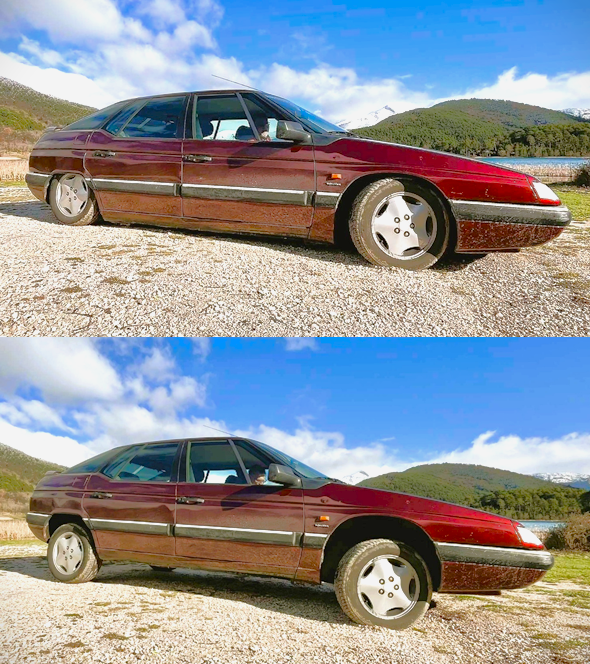
Hydropneumatic suspension has been a game-changer, utilising a pressurised fluid and compressed gas in separate chambers (spheres) to provide exceptional flexibility and stability, especially when dealing with varying loads. This innovative system can be paired with height correctors that automatically level the vehicle and allow the driver to adjust the ground clearance between 11 and 19 cm, depending on the model. The photos on the left showcase a Citroën XM in its lowest and highest positions. It also aids in parking manoeuvres in tight spaces and facilitates wheel changes by automatically jacking the vehicle. Additionally, dampers integrated into the suspension spheres minimise oscillations after a shock and are virtually impervious to wear in hydropneumatic systems. Lastly, unlike metallic suspensions, which typically soften over time and may compromise vehicle stability, hydropneumatic suspensions generally become firmer.
While some manufacturers combine metallic springs with air-suspension components in a bid to strike a balance between a smooth ride and stability, the comfort, handling, and other benefits of genuine hydropneumatic suspension remain unmatched by these hybrid alternatives. For an in-depth look at the inherent advantages of hydropneumatic suspension, be sure to check out our Hypcar History section and visit Julian Marsh’s exhaustive and vividly depicted Citroënet webpages.