
The SM in Brief
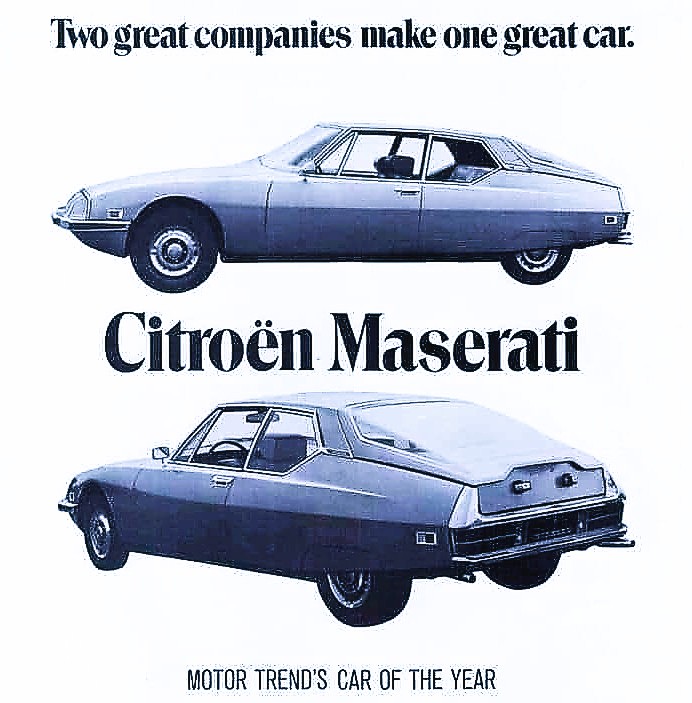
Get ready to buckle up because the SM sports saloon hypcar—also known as Citroën-Maserati—is the epitome of boldness in the automotive world! This beauty marked Citroën’s second alien vehicle after the iconic DS (or third if you count the pioneering Traction). The SM was the prodigy of an unconventional yet thrilling commercial marriage between the French innovator Citroën and the legendary Italian exotic car maker Maserati, which allowed Citroën to enhance its avant-garde technology, particularly its renowned hydropneumatic system, with Maserati’s “dowry” of long-standing expertise in sports engines.
When it hit the scene, the SM left even the most defiant car journalists astounded. They wrote about it with awe, praising it as a technological marvel, a tour de force, and a vehicle that could only have been conceived by NASA engineers during their free time! They were amazed by its driving dynamics, noting it offered a unique experience unlike anything they had tested before. Popular Science even stated that the SM boasted the shortest stopping distance of any car they had ever tested.
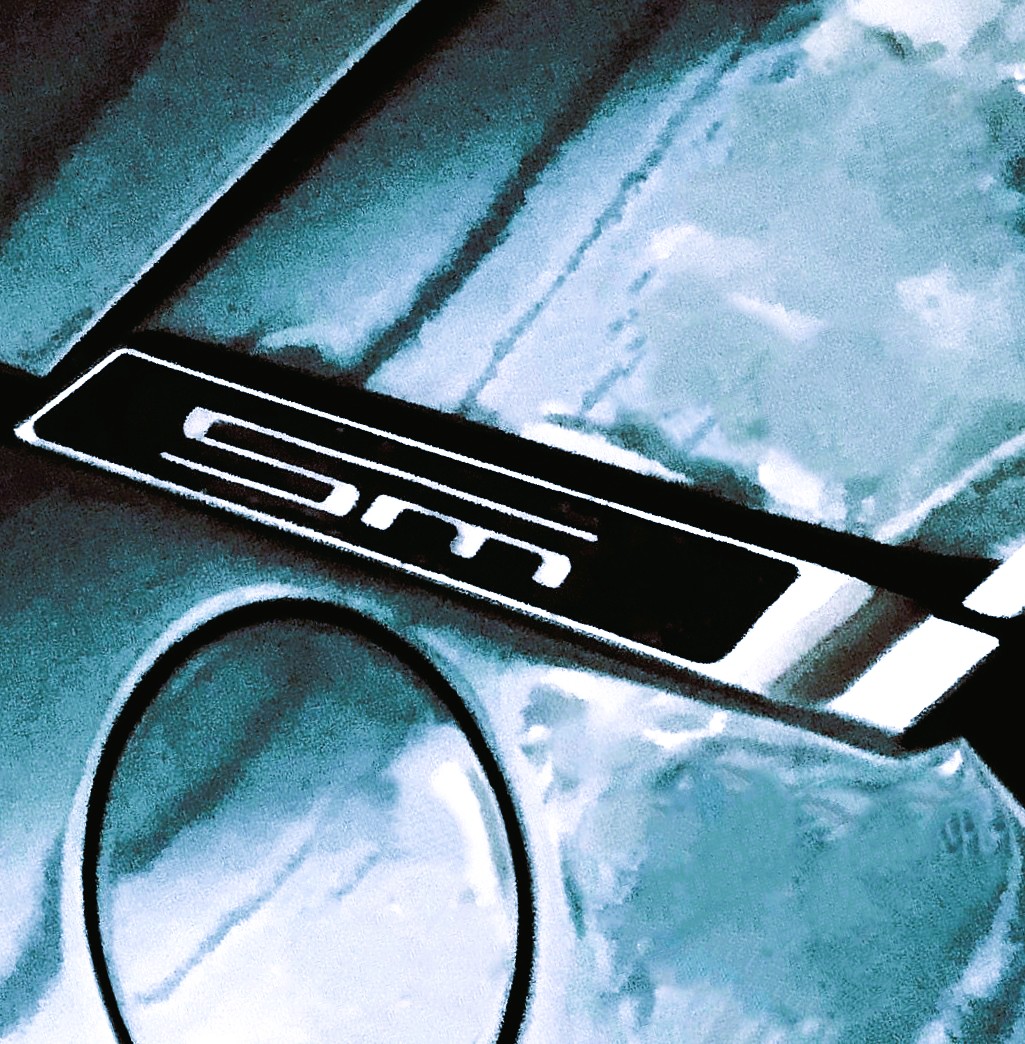
Introduced on my birthday in 1970, the SM’s name hints at its sporty lineage, standing for “Special Maserati,” “Sports Maserati,” or, most likely, “Series Maserati.” This car was engineered to be the ultimate combination of style, speed, and safety, much like the Concorde revolutionised air travel at the time. In 1972, the SM clinched the coveted Motor Trend Car of the Year award in the US, marking a historic win for a non-American vehicle. It inherited all the cutting-edge technology from the DS, including that fabulous hydropneumatic system controlling the suspension, steering, clutch, and power-assisted disc brakes, now available on the rear wheels as well. And yes, it kept those swivelling headlights, now powered by hydraulic links.
The SM also made waves with its innovative hydraulically self-centering and speed-sensitive steering, a game-changing feature that later appeared in the Citroën CX and the Porsche 928. Dubbed Diravi (short for “Direction à Rappel Asservi” or Servo Recoil Steering), this system adjusted steering assistance based on speed. As you accelerated, the assistance dialed down. At low speeds or when parked, the servo was so strong it would even steer itself back to the neutral position. It was also the first adjustable steering wheel in a European car.
The structure of the SM met new safety standards and was much stronger than the DS, ensuring rigidity at high speeds and stability during crashes. It had a solid platform, with the two front wings, the bonnet, and the boot lid being detachable. The bonnet was crafted from aircraft-grade aluminium, and the windscreen was the first ever to be glued! The SM successfully underwent crash testing against a solid wall at 48.5 km/h and flirted with early-version airbags, although those never made it to production.
The SM took aerodynamics to a whole new level with its sleek, airfoil-inspired design, even more daring than the DS. The front showcased striking double-curved glass, complemented by a distinctive fastback Kamm tail and eye-catching “bubble” glass. To be honest, I think this tail design, especially the rear glass, borrowed some flair from the Jensen Interceptor and Bizzarrini Europa, both of which predated the SM by four years, and which had, in turn, been inspired by Giugiaro’s famous ISO Grifo styling. But don’t let that overshadow its achievements—it featured a smooth underbody panel that resulted in an impressive drag coefficient for its era. Initial plaster prototypes hinted at a low of 0.26, yet the production model clocked in at a still impressive 0.339.
Despite the gap between theory and practice, the SM still boasted one of the lowest drag coefficients in the 1970s automotive market. Some sources have incorrectly cited a coefficient of 0.46, but the truth is in the numbers: the SM’s overall air resistance improved significantly by 25% compared to the DS. This upgrade translated into better stability, reduced noise, fuel economy, and it even set a record top speed for its engine size. With a claimed maximum speed of 228 km/h, the SM proudly held the title of the fastest front-wheel-drive car in the world at the time.

Powered by a V6 Maserati engine, the SM delivered a solid amount of power (170 DIN), which was 40 DIN more than the most powerful version of the DS. Weighing in at just 140 kg, this engine was cleverly positioned just behind the front axle, closer to the car’s centre. This thoughtful placement, coupled with the SM’s outstanding aerodynamics, gave it superb balance and stability. Additionally, the 0 to 100 km/h sprint in under 9 seconds, while it may not set the world on fire, was a respectable figure for a 1970s GT, hinting at two key takeaways: first, the DS had definitely been hampered by its lacklustre engines, and second, Citroën made a savvy move by acquiring Maserati in 1968. Back then, Citroën was riding high on innovation across the board—except in the engine department, where they were noticeably behind, especially in the sports car sector. But don’t forget, they also rolled out their first 5-speed gearbox with the SM, which performed well—mostly, aside from a few rally mishaps that led to catastrophic failures.
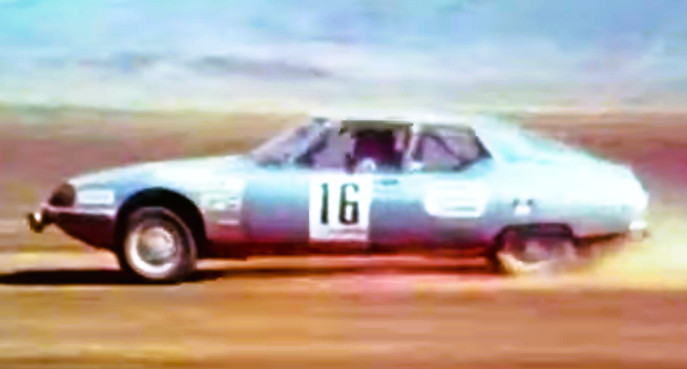
In 1971, J. Deschaseaux and J. Plassard took on the grueling Morocco Rally in an SM, finishing an impressive 1st place a remarkable 26 minutes ahead of the runner-up, out of only nine cars that crossed the line from a total of 66 competitors (photo on the right). The following year, Swedish rally legend Björn Waldegaard secured 3rd place in the SM/DS prototype at the Chamonix rally, even after rolling on just three wheels! He also achieved another 3rd place (1st in Group 5) in a shortened 240-horsepower SM at the Rally of Portugal. And let’s not forget about Sylvia Hathaway, who in 1987 set a speed record on the Bonneville Salt Flats, hitting speeds over 325 km/h in an SM modified by her engineer husband, Jerry.
Throughout its lifespan, the SM won the hearts of many celebrities, including Emperor Haile Selassie I of Ethiopia, the Shah of Iran, actors Lorne Greene, Tommy Chong, Cheech Marin, and Lee Majors, USSR Secretary General Leonid Brezhnev, composer John Williams, author Graham Greene, soccer star Johan Cruyff, Rolling Stones drummer Charlie Watts, and racer Mike Hailwood, who drove an SM to Formula 1 meetings. The SM appeared in several films, including the TV series “The Protectors” (1971), “César et Rosalie” alongside Yves Montand (1972), “The Longest Yard” featuring Burt Reynolds (1974), the American television series “Columbo” (1975), “Breakout” starring Charles Bronson (1975), “Zoolander” featuring Ben Stiller (2001), and “Killer Elite” with Jason Statham, Clive Owen, and Robert De Niro (2011) (video below). It even appeared in Janet Jackson’s music video for “I Get Lonely” (1998).
This magnificent and trailblazing luxury hypcar didn’t achieve the longevity Citroën had hoped for. The company’s ambitious plans for Wankel rotary engines were thwarted by market realities, including a sudden rise in fuel prices and subsequent speed restrictions in 1973 due to the oil crisis and the Yom Kippur War. Additionally, loyal Citroën customers were expecting a modernised and spacious DS rather than a costly two-door grand tourer. Although planned, a four-door SM never entered full production; only 12 units were eventually assembled.
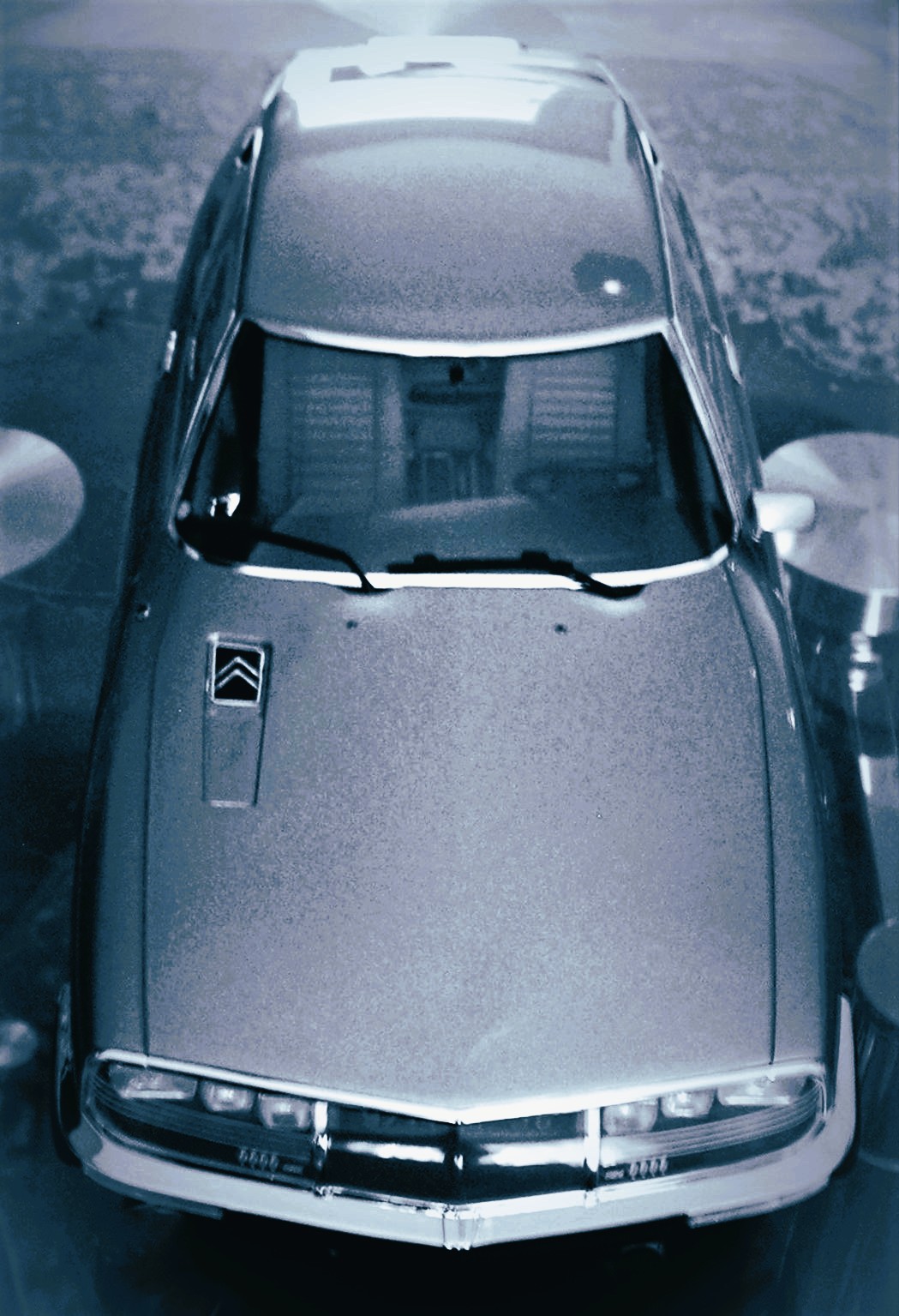
And if that weren’t enough, Citroën’s sales network also lacked the experience needed to promote such a car to a new clientele. In 1974, the SM was excluded from the promising U.S. market due to new bumper regulations that clashed with the car’s adjustable height feature. Some accused the SM of causing Citroën’s excessive debts that year and the subsequent merger with Peugeot, but SM production was never dramatically low for a supercar. In reality, it merely served as a scapegoat, a topic eloquently explored in S. Ager’s Accidental Death of an Icon. The SM’s production came to a premature end in 1975 under Peugeot’s directives. Nevertheless, the SM remained Citroën’s flagship and fastest model for several years until the introduction of the XM V6 24, which, on par with the Mercedes 450 SEL 6.9, was intended to be the fastest hypcar ever produced.
The SM earned its place in automotive history as one of the most thrilling GTs of its era and continues to be celebrated as a legendary vehicle. J. Clarkson from the Top Gear crew even dubbed it the most beautiful French car ever created! Sadly, it was introduced at a time when Citroën was stretched too thin with groundbreaking projects. The SM was an ambitious, nearly blue-sky project that seamlessly blended luxury, speed, comfort, and safety. If only Citroën had launched it sooner or later—or if it hadn’t merged with Peugeot—who knows how its story might have changed? In the end, the SM was simply a victim of bad luck.
SM Interesting Facts and Figures
-
This one-of-a-kind Gran Turismo hypcar challenged the automotive world with its technological advancements and sophistication, as it blended Citroën’s hydropneumatic suspension with Maserati’s high-powered engine. Between 1970 and 1975, a total of 12,920 SMs were produced, with about two-thirds equipped with a carburetted engine and one-third with fuel injection.
-
The SM was developed under the helm of engineer Jacques Né and designed by Jean Giret and Robert Opron. It boasted a remarkably low aerodynamic drag coefficient of 0.34, especially for the 1970s. The car’s V6 engine was the brainchild of Maserati’s chief engineer, Giulio Alfieri.
-
The Citroën-Maserati came with a choice of either a 2.7 or 3.0-liter engine. Out of the total production, 11,308 SMs were equipped with 5-speed manual gearboxes, while the rest were fitted with automatic gearboxes, primarily for export to the USA.
-
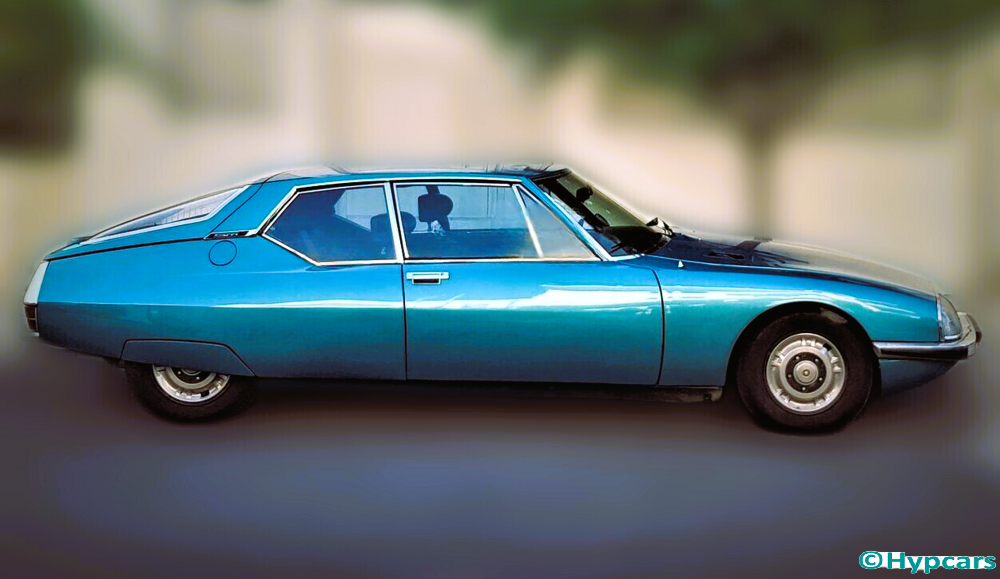
Today, fewer than 3,000 SMs still exist, and of those, around 2,000 are likely to have carburetted engines, including our hypcar collection model, which is painted in Bleu Platine (colour code AC632).