Back:

Another Love Story

It was 1972, and I was just in my preteens when everything changed—a moment so surreal it felt like stepping straight into a sci-fi movie! Biking along the sun-kissed Athens Riviera, I came to a screeching halt at the sight of the back of an incredible vehicle parked defiantly on the pavement. It was an SM in feuille dorée—a stunning golden leaf colour that sparkled in the sunlight, as if glowing from within. The right photo (by Ian Nixon) vividly reminds me of this first childhood encounter with the SM.

Slowly, I approached this exotic beast, my eyes widening with each step. From the back, it looked sleek and narrow, almost unassuming—until I reached the front, where those bold, confident shoulders flared out in an aggressive stance that seemed to challenge the very ground it rested on. Its surface was impossibly smooth, as if the wind had sculpted it. Sharp lines and flowing curves wove together in perfect harmony, leaving me absolutely speechless. At that age, I didn’t fully grasp its technological prowess, but it was clear: this was no ordinary machine—it was a rolling dream!

In that electrifying moment, I pictured my father behind the wheel, us cruising through the city like royalty. I pleaded with him to consider making it ours—to let us own this spaceship on wheels. But he simply shook his head, echoing the familiar refrain: the SM was too complex, too fragile, and far beyond our reach. “Our social standing doesn’t stretch beyond a DS,” he said with a blend of regret and realism. Just like that, the dream was filed away—tucked between school homework and summer vacations—until years turned into decades.

Then, thirty years later, that dream roared back to life. We tracked down a breathtaking SM hidden away in the Haute-Savoie, nestled between alpine peaks and crystal-clear lakes. And it wasn’t just any SM—this beauty was a carburetted version, a bit tamer in power but simpler and more reliable than the fuel-injected version. And it was perfect. Still in the hands of its first owner, it wore a coat of Bleu Platine—my absolute favourite shade, exclusive to 1971. With a frame number of #00SB2749, it had defied the odds by clocking only 55 000 km.

The original owner handed over a thick stack of handwritten service notes, brittle and faded, like pages from a secret journal. They revealed a quiet tale: after the first three years, this SM barely moved, averaging about 1,000 km per year. It had been slumbering through the decades, patiently waiting.

Soon, we’ll dive deeper, replacing the timing chain and uncovering more of its history hidden within the engine’s metallic core. But for now, every glimpse of this automotive marvel transports me back to that golden summer in Athens. And the dream—my dream—feels more vibrant than ever.


Minimal but Meticulous Restoration

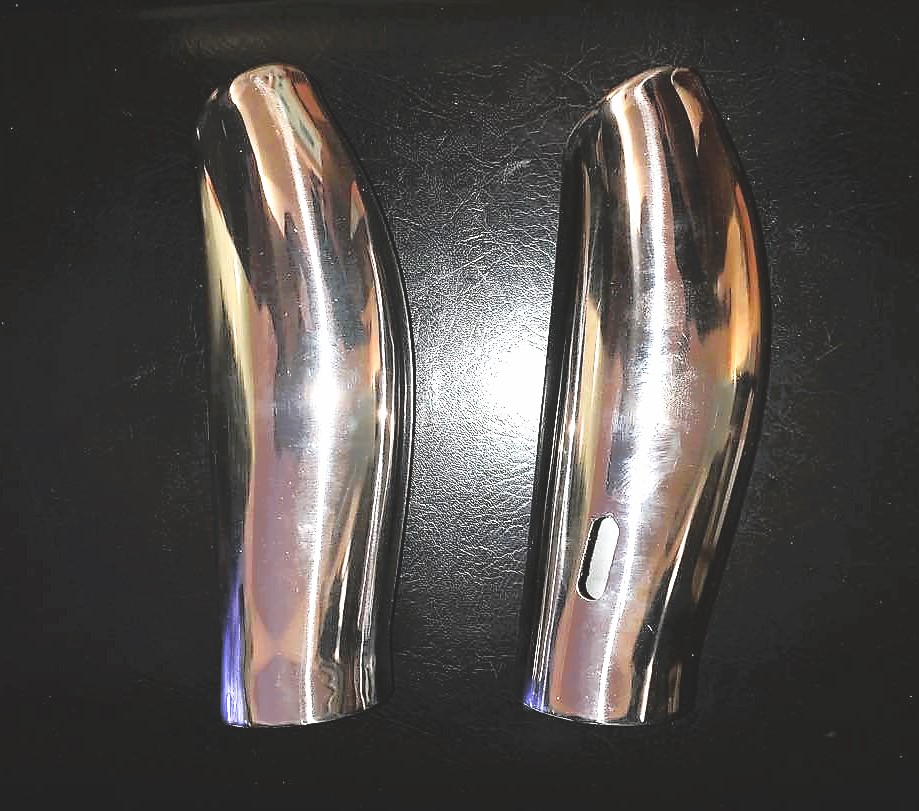
Thanks to its low mileage and solid maintenance history, refurbishing the SM hypcar turned out to be a breeze! The bodywork just needed a few minor touch-ups—mostly fixing a handful of scuffs and scratches, along with replacing a couple of worn or missing trim pieces. One of the standout moments was when we tracked down two missing, aerodynamically shaped, teardrop-style chrome exhaust nozzles (photo on the left), a true SM hallmark. We also swapped out the original exhaust pipes for robust stainless steel versions.

We opted to give this beauty a fresh coat of its original colour, as the original shade had faded over time. The final paint job turned out excellently, albeit a touch darker than the original—closer to Bleu Brégançon AC637 from 1973 than the intended 1971 Bleu Platine AC632 (see comparison photos below). The new hue is definitely striking, but I’m still contemplating whether to correct this shade discrepancy in the future. I’d love to hear what you think!

A significant part of the restoration focused on the interior—especially the upholstery. While the leather door and rear side panels held up well after more than 40 years, the seats were a different story. Years of sun exposure and moisture had taken their toll, leaving the leather dried out, stretched, and torn in several places. Recreating the original upholstery pattern proved to be quite a challenge, but we persevered. We sourced high-quality, thick, coarse-grain leather—an increasingly rare find—and rebuilt the interior foam (Dunlopillo) to its original shape. The leather pieces were meticulously cut to precise measurements, correcting decades of wear and deformation. The photos below illustrate the process step by step.

Beyond the upholstery, we refreshed the headlining and upgraded the interior insulation with modern, high-grade felt. We didn’t stop there; four out of the six halogen headlights were converted to xenon with the installation of amplifier units. Additionally, we upgraded the two pivoting headlights and the remaining lights—front, rear, and interior, including the small bulb that illuminates the ignition key—to LED for cooler operation and improved energy efficiency.

Last but not least, we made a subtle yet significant improvement to the air conditioning system by adding a cut-out feature to prevent overheating—an all-too-common issue in the original setup.


SM Experiences

Let’s take an intimate journey into the extraordinary world of the GT hypcar, the Citroën SM, exploring it from the outside in and through the driving experience. Right off the bat, this beauty exudes that unmistakable Citroën big saloon style, thanks to its smooth curves and soft lines, all while being spiced up with bold, sharp accents that highlight its sporty and flamboyant character. From the profile, you can see its two-volume body adhering to the aerodynamic and strikingly innovative design principles set by the DS, but with a modern twist perfect for a two-door sports car. Instead of the removable rear fender of the DS, the rear wheels of the SM are cleverly covered by a detachable piece that seamlessly blends into the sleek tapering line. Surprisingly, though, removing this small plastic wheel cover proves to be a bit trickier than taking off the entire fender on the DS!

Interestingly, the SM is the only Citroën hypcar that does not flaunt the company’s emblem either on its front grille or its boot lid. Instead, you’ll find the iconic double stripes sitting proudly higher on the right side of the bonnet, adding a dash of style to the air intake. The front end is undeniably unique, defined by the absence of a conventional grille and boasting six glazed headlights that span elegantly from side to side. Even the licence plate is treated to that stylish glass glaze!

On the other hand, the rear of the SM has faced criticism over the years for being a bit too chrome-rococo. Love it or hate it, I personally find the overall shape of this hypcar to be simply perfect and absolutely breathtaking, though I must admit to a slight bias!

Now, let’s jump inside! Once you settle into the more relaxed and less sporty driver’s seat, you’ll immediately notice the compact, oval-shaped steering wheel. A standout feature here is that it’s adjustable in height and depth—a first for European cars! Moving forward, you’ll find a plethora of seat adjustment options, including a uniquely reclining backrest. Unlike most vehicles, this backrest reclines at a higher point than the angle between the back and the seat, providing practical lumbar support that helps prevent back fatigue.

Having lived through the conformity of the ’90s, I can’t help but feel a pang of nostalgia for a front armrest, especially when I compare it to the luxurious rear armrest, which I seldom use! The SM’s dashboard continues to impress, showcasing a distinct ’70s industrial vibe. The oval tachometer and speedometer are perfectly paired with the famed Diravi steering wheel and are conveniently accessible. However, some of the various indicators—while impressively comprehensive for their time, including fuel, temperature, and oil gauges along with warning lights—are awkwardly positioned too far from the driver towards the centre of the dashboard or are partially obscured by the steering wheel.

The late motoring analyst and former Top Gear and Fifth Gear presenter, Quentin Wilson, could not help but exclaim that “everything about driving and owning an SM requires an alternative mindset.” He was right; what might seem ordinary in an SM is anything but. Take the handbrake, for example; it operates quietly thanks to a flat cylinder rather than the typical noisy cogwheel. Then there are the two-speed wipers, which incorporate an ingenious rain-sensitive mechanism—fully 25 years ahead of its time! This system cleverly measures the current needed for the wiper motor, activating a higher speed as moisture increases on the windscreen. I had read about this before, but witnessing it in action after fifty years? Absolutely mind-blowing!

Among the very few flaws, rear visibility is not great, and the lengthy bonnet can distort your sense of space, even with that panoramic curved windscreen. Plus, the SM is 4 cm wider and 1 cm longer than the DS, so make sure you’ve got a spacious garage to accommodate it! But here’s the kicker: those pivoting headlights deliver remarkable night vision. I wouldn’t dwell on the SM’s boot space, which is famously occupied by the spare wheel; honestly, who cares about trunk room in an SM? This hypcar is all about the thrill of driving, designed for joy and excitement in the ’70s with safety as a priority—family transport be damned! Sure, it can fit five for short trips, but for longer journeys, you’re better off with just one child along to keep that rear seat free for luggage, given the tight boot situation.

When you turn the key on that Maserati engine, it starts smoothly. If it’s a bit chilly, you might have to use the full choke; if it’s too hot, a little extra throttle will do the trick. You’ll feel the hydropneumatic system pressurising the suspension spheres and raising the car to its normal height. Give the steering wheel a turn and let it go, and watch as it automatically centres itself—such a cool feature! At idle or low revs, the 6V Maserati can sound dull, but once you rev it up a bit, that raspy roar begins, and above 4000 rpm, it unleashes a thrilling Italian growl. Honestly, the symphony of engine sounds is far more exciting to me than the actual performance, especially regarding acceleration.

The SM might be a sleek two-door coupé, but don’t let its compact appearance fool you! It adds an extra 150 kg compared to the DS, thanks to its sturdier construction rather than a heavyweight engine, which is surprisingly light. Once you hit the road, the SM dazzles with its handling, especially after you become acquainted with the ultra-responsive, self-centring VariPower steering. This marvel of steering—known as DIRAVI in France or SpeedFeel in the US—might seem a bit daunting for those used to traditional 1970s systems that required a handful of turns and often delivered a vague driving sensation.

My first encounter with this groundbreaking steering was a blast! Armed with a bit of prior theoretical knowledge, I adapted swiftly, and it turned out to be the SM’s most comforting feature. I found that reclining slightly in my seat and extending my arms actually helped control its lively responsiveness, striking the perfect balance.

And let’s not fret about that “quirky brake button”—it operates just like its predecessor in the DS. Back in 1970, the SM was a standout performer when it came to braking, boasting one of the shortest stopping distances around, and guess what? It still holds its own today! Sure, wet conditions might present a challenge since ABS was not available at the time, yet the SM still manages to stop smoothly and effectively, as the German SM Club has showcased. One delightful quirk is how the SM squats during hard braking instead of nosediving—classic Citroën! It even includes a front-wheel-acting handbrake, adding a dash of uniqueness to its braking setup.

On the performance side, the SM’s aerodynamic design allowed it to achieve top speeds that left the competition in the dust, outpacing rivals like the BMW 3.0, Fiat Dino, Mercedes 350 SLC, and Rover 3500. The factory claimed it could hit 220 km/h (or 228 km/h with the post-1973 injection engine), but I’m convinced it can soar even higher! In my own experience, I cruised at an indicated 210 km/h at just 5000 rpm. Taking into account a speedometer error and a friendly tailwind, I’m fairly sure the carburettor model could top 230 km/h by reaching the remaining 1500 rpm before hitting the red line.

The standout feature of this car is its remarkable stability at high speeds, transforming every drive into an absolute joyride. Honestly, the SM experience outshines that of any other hypcar. After just a few hundred kilometres behind the wheel, you’ll quickly realise that when the going gets tough—whether it’s bumpy roads or unpredictable weather—the SM truly shines, offering superior road grip and agility compared to its rivals. On the other hand, this pristine 50-year-old hydropneumatic marvel encourages a smooth and gentle driving style rather than aggressive racing. The reward? An effortlessly relaxed and confident journey.


All in all, the SM is a hypcar that perfectly marries eye-catching aesthetics with impressive performance. Its handling and safety feel top-notch without sacrificing comfort. When we think of cars from the ’70s, the SM seamlessly merges the spirited performance of a Fiat Dino or Alfa Romeo Montreal with the plush comfort of a Rolls-Royce Silver Shadow—while consuming less fuel than you might expect. But the real kicker? This beauty can effortlessly raise its ground clearance and transform into an off-road vehicle in a matter of seconds! Honestly, even on a smooth motorway, I find myself toying with the height lever during traffic jams, just for fun and to keep fellow drivers entertained!

.

error: Content is protected !!