
The CX in Brief
There comes a time when everything must be replaced, and after two decades of reign, even the legendary DS couldn’t escape this fate. In 1974, the CX was unveiled to the public, taking on the formidable yet audacious task of replacing the lower-end DS models. However, when Citroën and Peugeot merged in a surprising turn of events, the CX found itself as the rightful heir to the illustrious DS legacy. Looking back, it’s evident that the CX was much more than just a temporary stand-in for the DS.

In 1975, the CX 2000 earned the coveted title of European Car of the Year, prized for its groundbreaking features and innovative design. With its sleek silhouette, improved aerodynamics, and superior handling compared to the DS, it quickly captured the hearts of enthusiasts and solidified its place as one of the standout performers of its time. The CX remained a beloved choice for years, and it is easy to see why.
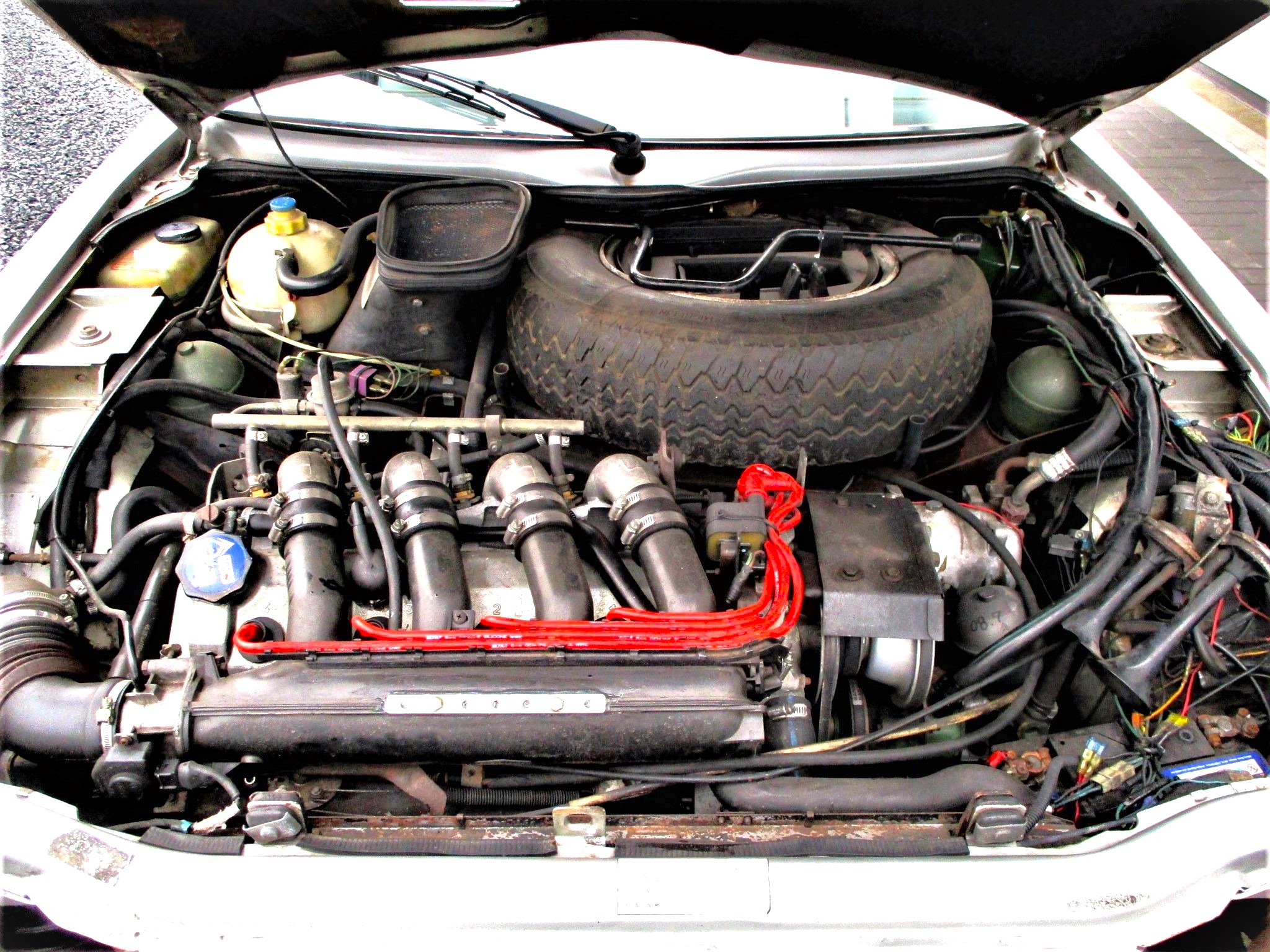
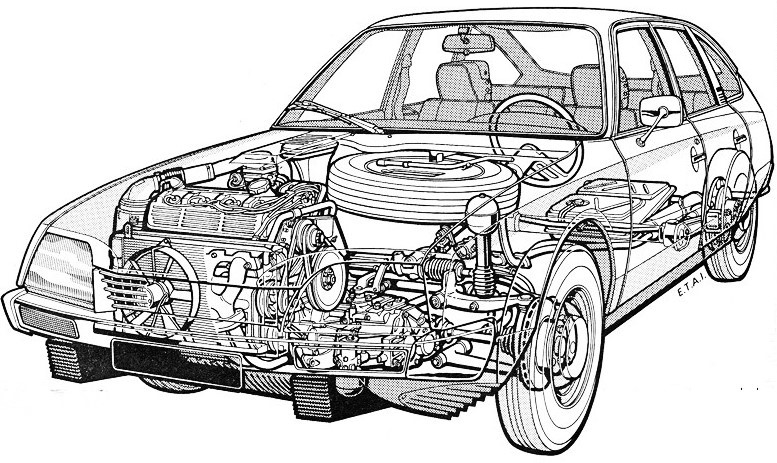
Designed for maximum interior space and minimal cabin noise, the engine was ingeniously mounted transversely. True to the Citroën spirit, the spare wheel nestled comfortably under the bonnet. The CX showcased a remarkably rigid superstructure, enhancing safety and reintroducing a (pseudo-)chassis design that had been on hiatus since 1934. Additionally, it retained the DS’s ingenious idea of placing the pivots at the centre of the wheel axle, ensuring that steering remained unaffected by road irregularities or differences in rolling resistance, even in the unfortunate event of a flat tyre.
The CX also borrowed the Diravi steering assistance system from the SM, which adjusted based on speed and steering angle and even automatically centred the steering wheel. Outfitted with outboard-mounted ventilated disc brakes, the CX moved away from the inboard brakes typical of previous Citroën hypcars. It also boasted a pioneering single windscreen wiper and a distinctly futuristic interior and dashboard that evolved beautifully throughout its production run.
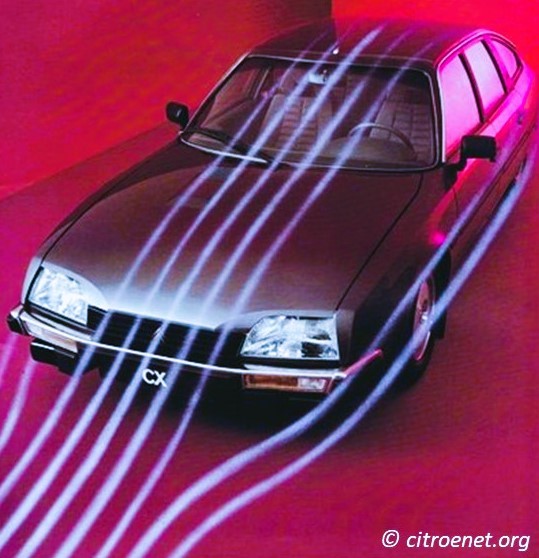
Aerodynamically speaking, the CX flaunted a sleek profile, achieving a slightly lower drag coefficient of 0,37 compared to the DS’s 0,38. However, the new hypcar was also lower and narrower, resulting in a smaller frontal area and over 10% reduced overall air resistance (the product of the drag coefficient and frontal surface area; more details can be found in the Hypcar Oddities section). With its extended body, the CX Prestige variant (see the top photo) achieved an even more impressive drag coefficient of 0,34. The Series 2 GTi version, equipped with spoilers, recorded a drag coefficient of 0,33. In contrast, the estate version lagged with a coefficient of 0,39, although this figure remained below the average coefficient of 0,45 for estate cars of that era. In proportion, the CX’s 1974 aerodynamic figures were less impressive than the DS’s 0,38 in 1955.
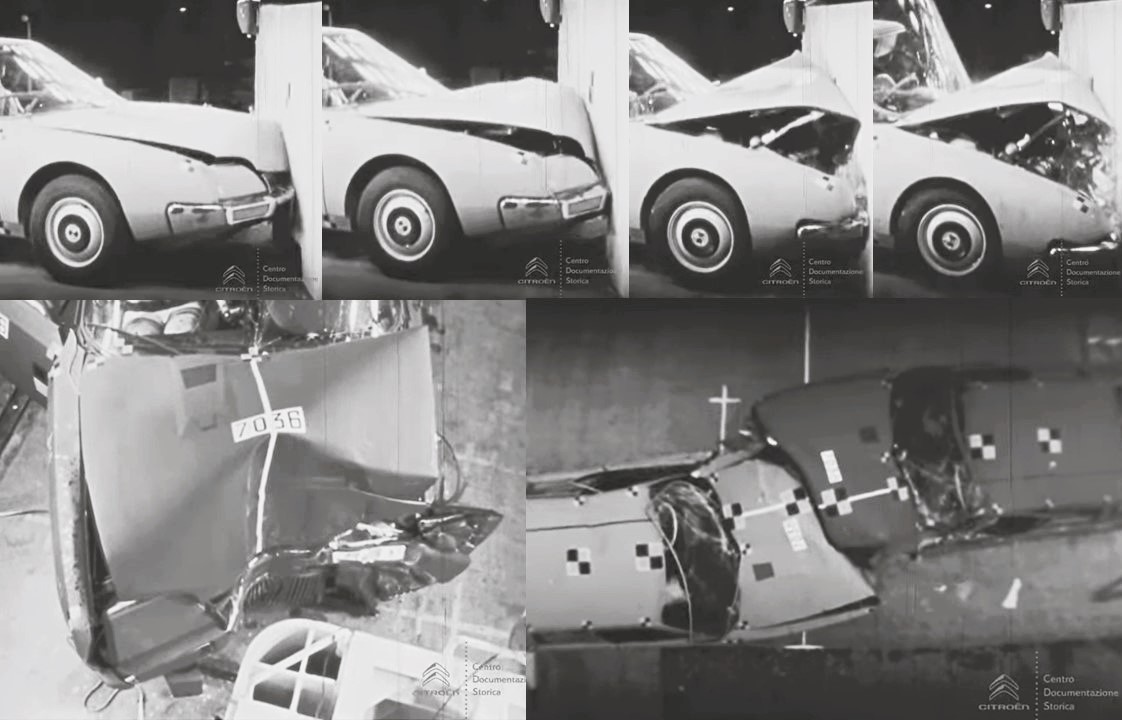
With a strong emphasis on passive safety, the CX embraced modernity wholeheartedly. The vehicle underwent rigorous crash tests, yielding impressively robust results. Even in angled crash scenarios, the collapsible non-habitable section effectively absorbed impact energy.
The CX seemed to have it all… or almost. Unfortunately, in a quest to streamline costs and mitigate risks, it missed out on the steerable headlights of the DS, along with the promised triple-rotor Wankel engine developed by Comotor, a joint venture between Citroën and NSU. Instead, it relied on the “agricultural” engines from the DS lineup,  apart from a couple of diesel models and the sporty 2,5 turbo version that delivered respectable performance. Even with these engines under its bonnet, the CX secured first place in numerous rallies from 1976 to 1986, tackling tough terrains in Senegal, Morocco, the Acropolis, and the London-Sydney. And, of course, who can forget the famous banned advert from 1986 featuring Grace Jones in a CX, boldly claiming a speed of 220 km/h?
In summary, despite its impressive technological advancements, the CX did not initially achieve the iconic status of the DS or evoke the same emotional excitement that accompanied the DS’s debut 20 years earlier. Ultimately, however, it matched the sales figures of its predecessor and was celebrated for its significant technological achievements. It is now regarded as the last true Citroën hypcar before the establishment of the PSA Group under Peugeot.
 CX Interesting Facts and Figures
-
The CX took the reins from the legendary DS in 1974 and was produced until 1991. It was rolled out in two series, with Series 2 arriving in 1986, featuring a stylish makeover that swapped stainless steel for plastic bumpers and trim, along with a newly designed dashboard assembly.
-
Designed by Robert Opron, the CX emerged as a remarkable successor to the iconic DS, showcasing significant modernisation in key areas such as road holding, passive safety, and ergonomics. It even boasted over 10% less air resistance than its predecessor, the DS.
-
The CX offered an exhilarating choice of ten different engines, including carburetted, fuel-injected, atmospheric, and turbocharged options (which included two atmospheric versions and one turbo diesel). The turbo diesel claimed the title of the fastest diesel in the world back in 1987! Engine displacements ranged from 2 to 2,5 litres, with horsepower varying from 102 to a thrilling 168 DIN.
-
In total, around 1,2 million CXs rolled off the production line, slightly shy of the 1,5 million DSs. Of these, only 29 380 sported the extended 25-centimetre Prestige chassis. One standout from this lineup is a stunning 1988 Series-2 CX 25 Prestige, dressed in pearl grey metallic (colour code AC073). With only 1 300 units produced, this beauty is a rare gem in the hypcar world!