Driving Experiences
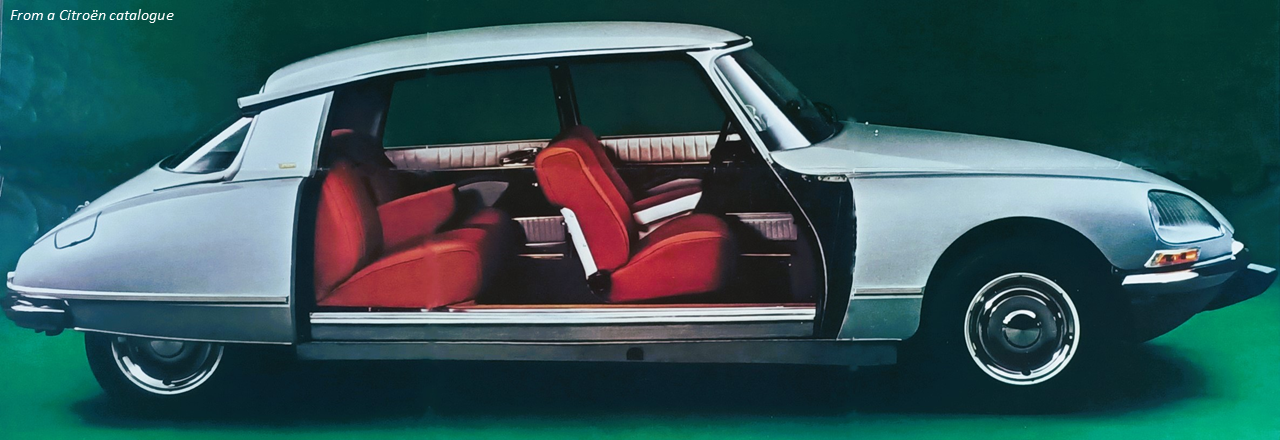
The DS is not just a feast for the eyes; it delivers driving and riding experiences like no other car. As you approach it, you’ll discover a lightweight door that swings open to reveal a unique interior step board encircling the cabin, almost wrapping you in a cocoon of comfort. Slide into the car, and you can sink into the plush front armchairs or luxuriate on the sumptuous rear sofa. The inviting atmosphere remains intact whether you are stationary or cruising, enveloping both the driver and passengers in a spacious cabin that adeptly absorbs road bumps and imperfections.
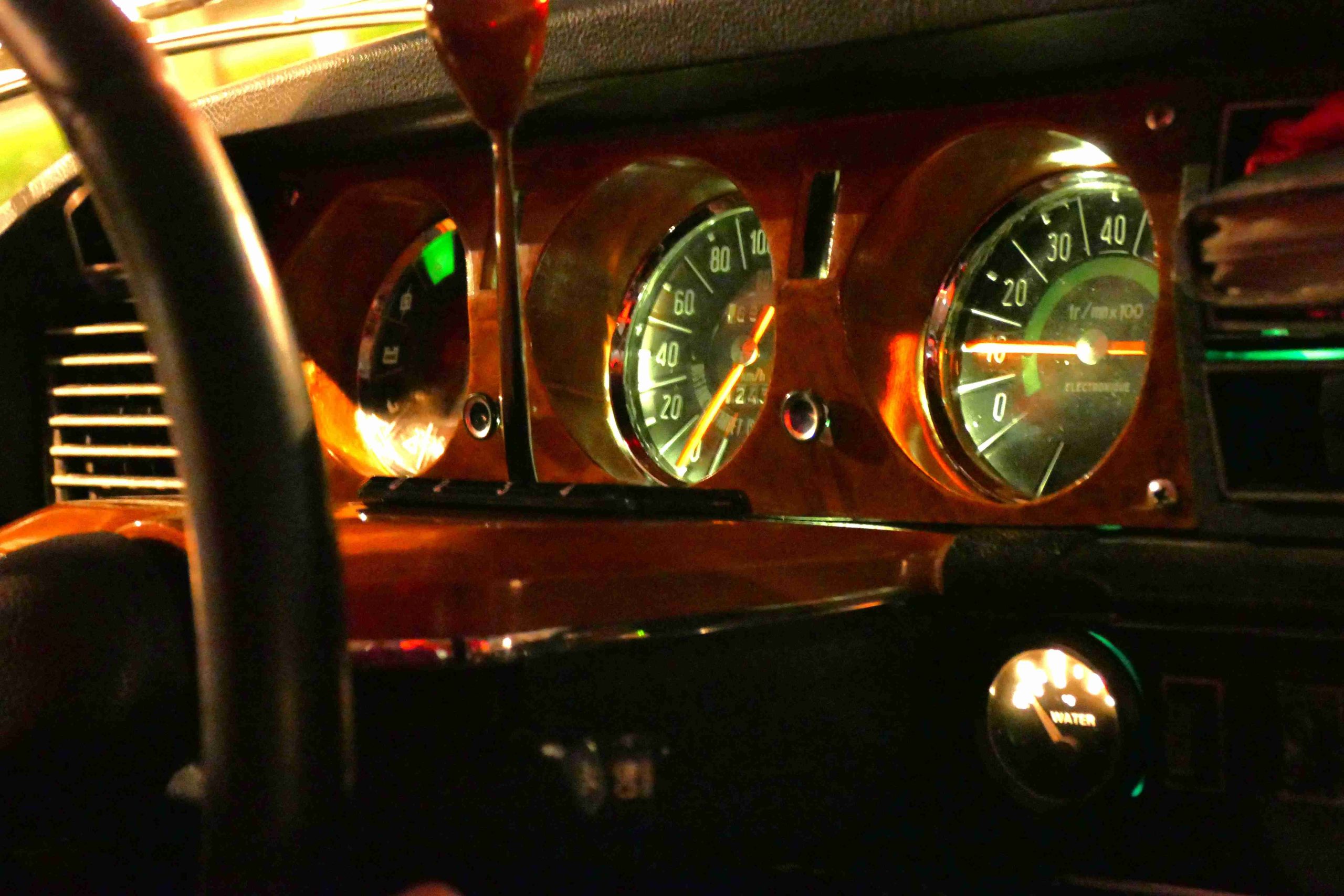
But the charm of the DS goes far beyond its exceptional comfort. Inside, boredom is not an option! The DS, apart from having no springs, in this semi-automatic version has no clutch or brake pedal and has just a single spoke in the steering wheel. And while all other cars of its era would require a key to start, the DS takes a different approach. The car key serves merely as a contact, much like in modern vehicles, but to start the engine, you must push the gear lever to the left. Does that sound like a gimmick? Not at all! This clever design prevents accidental gear engagement by the semi-automatic transmission, which, as mentioned, does not have a clutch pedal.
Next, you’ll need to disengage the parking brake—this isn’t a handbrake; it’s a pedal that must be released manually. Then, shift into 1st gear by nudging the gear lever forward. For 2nd gear, pull the lever back; for 3rd and 4th gears, move it to the right. All gears can be selected with a feather-light touch, except for reverse, which requires a bit more effort. To engage reverse, gently nudge the lever past 1st gear and then to the right. Mastering smooth gear changes in the semi-automatic DS takes a bit of practice to synchronise each upshift with the throttle release.
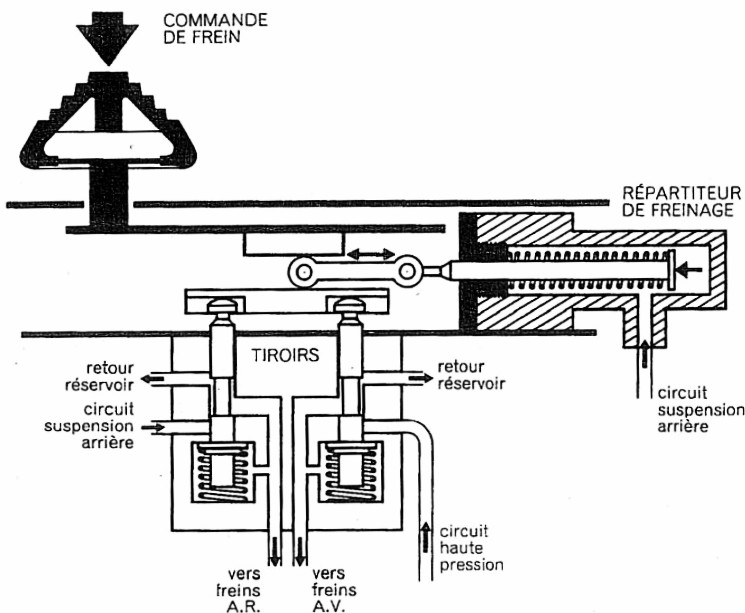
The DS features a touch-sensitive elastic brake button instead of a conventional pedal, allowing the car to stop with the slightest tap. This system is connected to the rear suspension spheres and includes a front-rear pressure distributor that adjusts based on the load (see the right photo from a Citroën catalogue). Having learned to drive in a DS, this unique setup feels completely natural to me. The catch? I often need to readjust when switching to a standard car, except the Mercedes SLR, which incorporates the conceptually similar Sensotronic Brake Control (SBC) system introduced about fifty years after the DS!
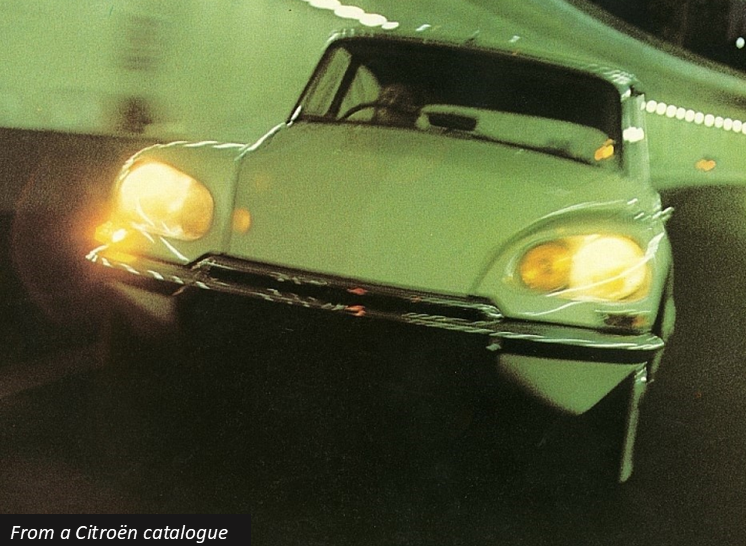
Driving the DS feels more like floating or gliding above the road than simply rolling over it. As Steph beautifully described on her idriveaclassic channel, “you just glide along like a swan on a pond!” Even by today’s standards, the car’s handling is impressive, providing an unmatched sense of safety whether cruising day or night or tackling any road. The DS can even help correct a bit of careless driving, much like modern Electronic Stability Programme (ESP) systems. This is all thanks to its well-balanced weight distribution, excellent aerodynamics, unique suspension system and geometry, as well as standout features like the cam that guides the steering column into its neutral position. This clever mechanical trick compensates for the lack of self-centering due to the zero-offset front axle geometry.
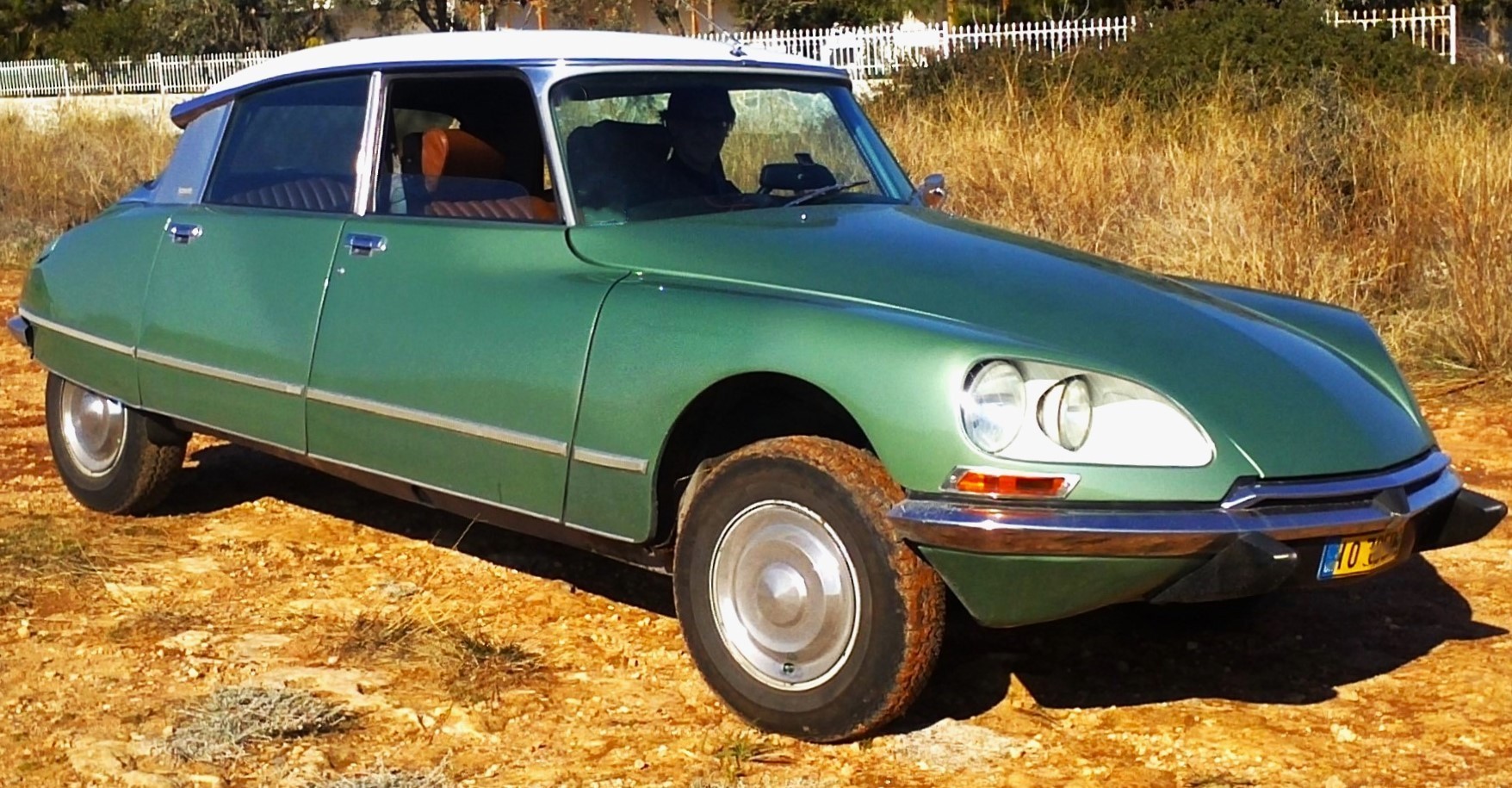 When faced with rough dirt roads featuring extreme irregularities, the suspension can be adjusted to a higher position, ready to handle any terrain. In the city, I am continually impressed by the parking prowess of the DS, especially given its size. This is due to its beautifully curved front end, a design choice that has inspired modern cars to be sleeker and more adept at fitting into tight spots. Additionally, the extremely curved windscreen and slender A-pillars provide a panoramic view, making it ideal for navigating roundabouts and sharp corners.
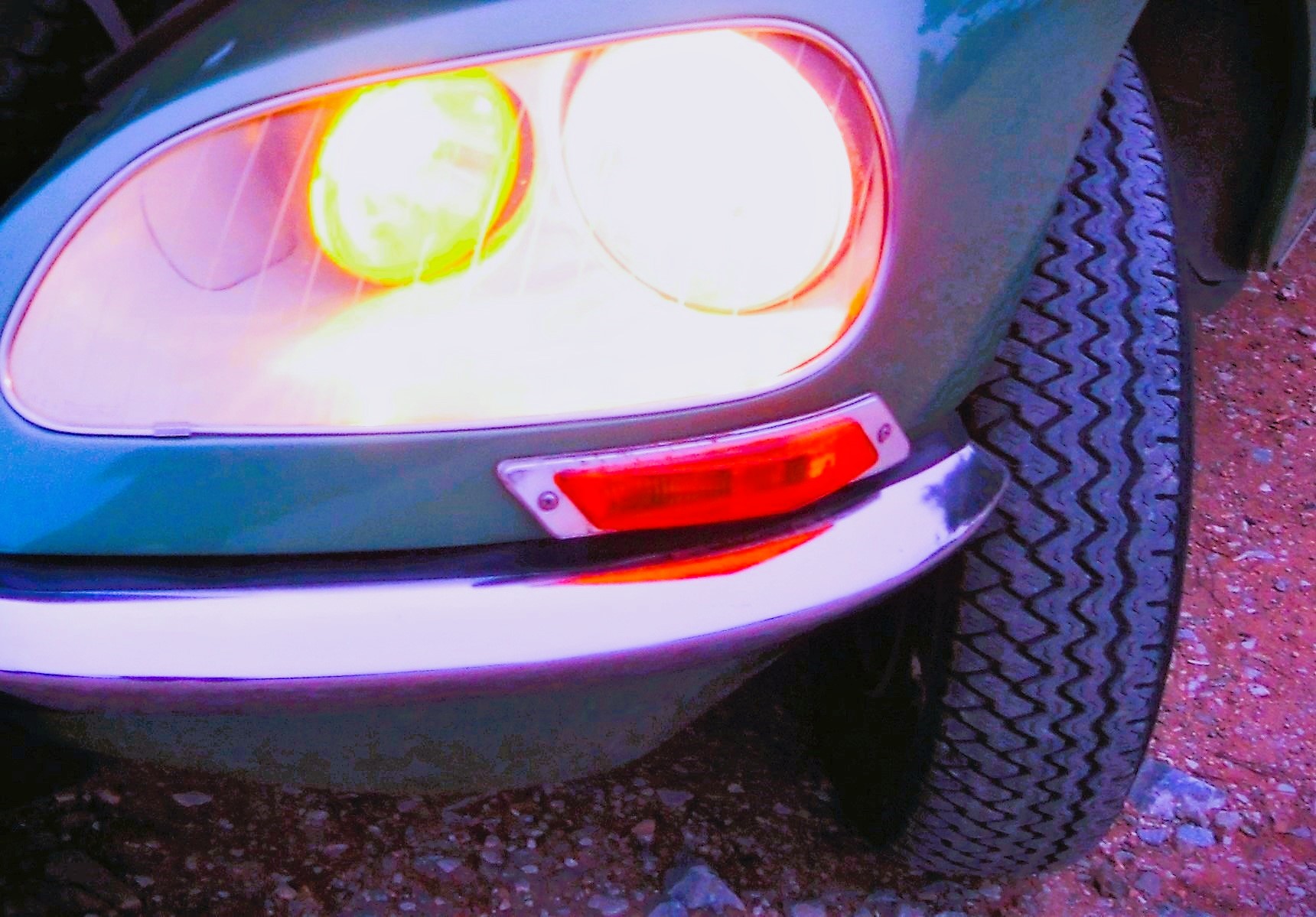 The high beams can swivel up to 80° and adjust to the vehicle’s movements, effectively illuminating exactly where needed. The large single-spoke steering wheel ensures that you can easily see all the instruments at any steering angle. Finally, the main controls are thoughtfully positioned around the steering wheel, a significant advantage over most cars of its era, where buttons were typically located on the dashboard. The DS even has a two-tone horn that offers low or high sound, activated by varying pressure on the same control depending on the driving situation!
We once faced an unusual safety scenario while cruising in the DS. I must admit, I hadn’t secured the bonnet properly, and it flew open at around 100 km/h. Thankfully, the curve at the edge of the bonnet creates a visibility gap, allowing the driver to see the road beneath the vertically opened bonnet. This design feature likely saved us from serious trouble. I eventually realised that the same principle applies to the boot lid, so it’s safe to say the DS is possibly the only car that can be driven on three wheels while both the bonnet and boot lid are wide open!
All in all, driving a DS is an experience everyone should have at least once in their lifetime! I wholeheartedly recommend that novice drivers approach it with an open mind and be prepared to shed their old driving habits. Every time I take a spin in a DS, I’m reminded that my sheer joy isn’t just a personal sentiment. It’s not solely about how the car looks; its unrivalled hydropneumatic smoothness and enchanting handling qualities elevate the entire experience. Witnessing the delighted reactions of enthusiasts of all ages throughout Europe, who cannot help but rave about this classic gem, makes it impossible to drive this vehicle without feeling effortlessly cool!