
Hydropneumatic Basics
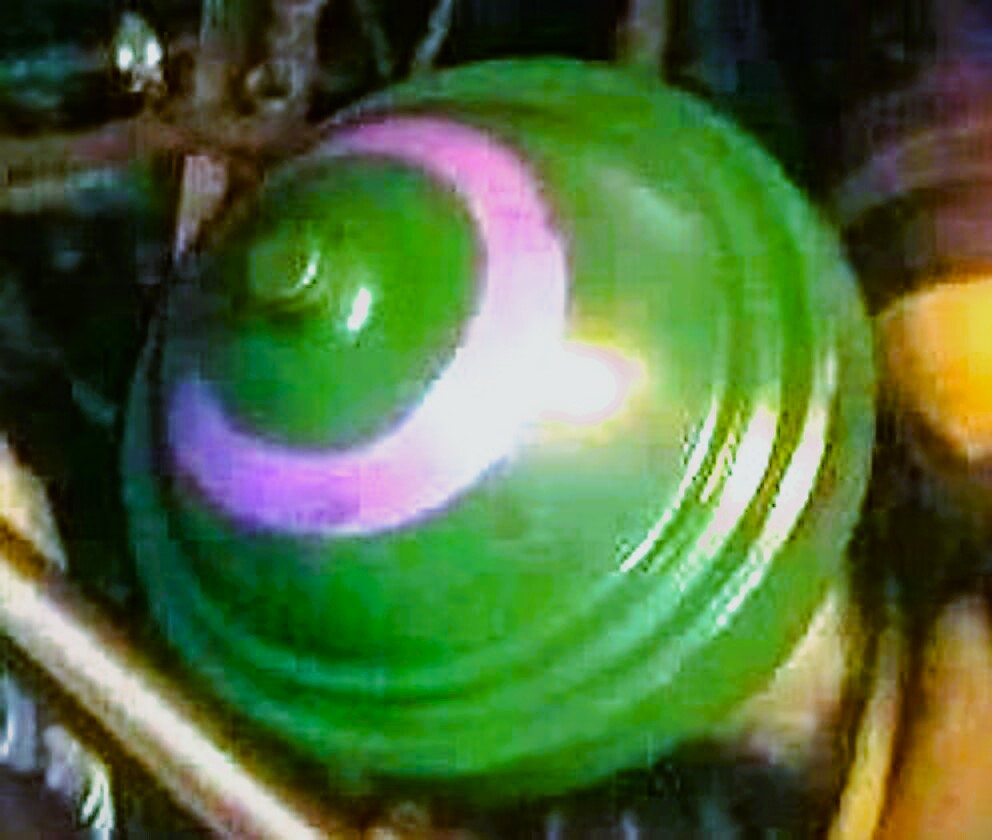
Throughout automotive history, the vast majority of vehicles have relied on classic suspensions featuring coil or leaf springs, and occasionally, torsion bars, paired with hydraulic or gas dampers. But hold onto your seats, because we’re about to dive into a game-changer: hydropneumatic suspensions! These advanced systems achieve unprecedented shock absorption through metallic spheres (see photo on the left) that are partially filled with a non-corrosive gas—specifically, nitrogen (marked as ‘1’ in the diagram below)—alongside a mineral or synthetic hydraulic fluid (marked as ‘2’ in the diagram).
But this isn’t just a… carbonated suspension, as the fluid and gas are separated by a sturdy yet flexible rubber or synthetic diaphragm (marked as ‘3’ in the diagram below). When the piston in the suspension cylinder applies pressure to the fluid, the diaphragm compresses against the gas, delivering an impressive six times more elasticity than traditional setups with steel coils! The hydropneumatic sphere does double duty here: the pressurised gas acts as the spring linking the wheel to the vehicle, while the fluid serves as a damper, expertly managing the suspension’s oscillations by flowing through narrowing rings in the lower section of the sphere (marked as ‘4’ in the diagram).
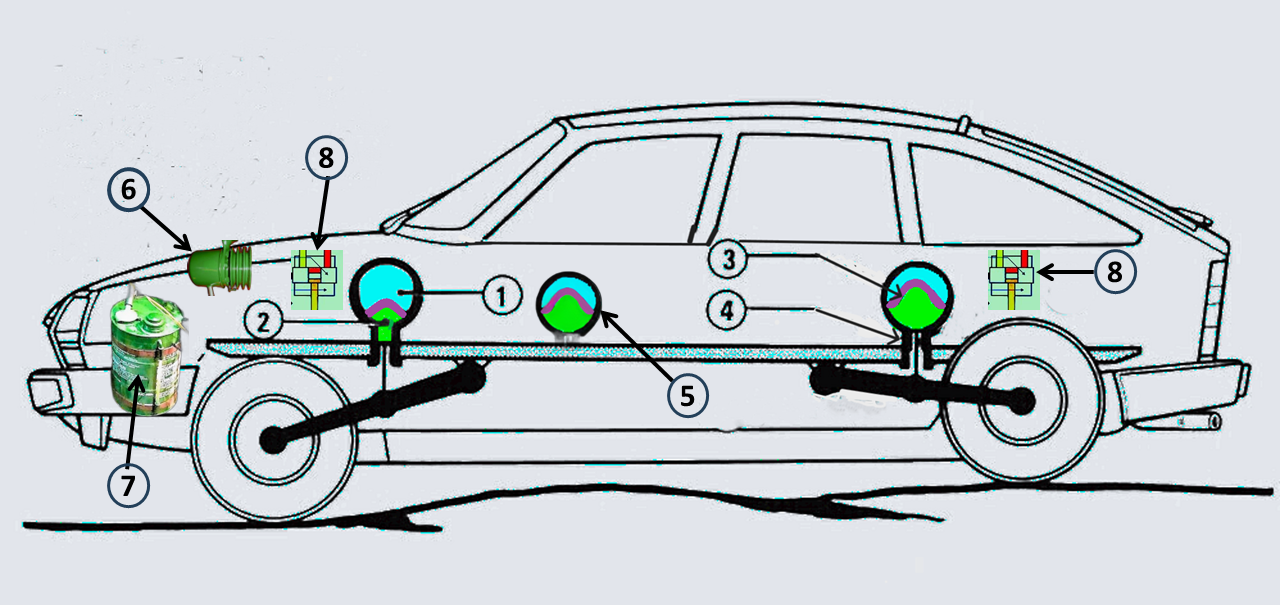
 And that’s not all! The hydraulic fluid (e.g., LHS, LHM, or LDS, shown in the right photo) connects to a central sphere known as an accumulator (marked as ‘5’ in the diagram above), which helps maintain pressure within specified limits. To increase pressure on demand, fluid is pumped from a reservoir (marked as ‘7’ in the diagram), using a high-pressure pump (marked as ‘6’ in the diagram above), which is powered either by the engine or electrically.
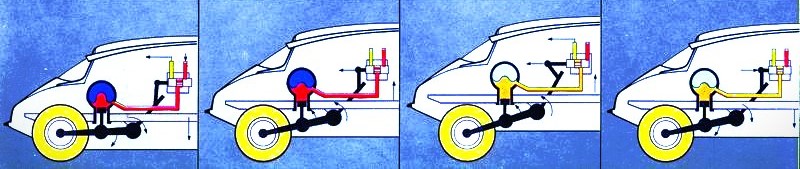
In addition to their hydropneumatic suspension, some hypcars come equipped with height correctors (photo on the left). Hydropneumatic Citroëns, for instance, feature one corrector at the front and another at the rear  axle (marked as ‘8’ in the picture above). These robotic devices are cleverly connected to the anti-roll bars, forming a dynamic duo that led to a Citroën patent. Height correctors, or regulators, tirelessly adjust the vehicle’s level without the need for electronics (see the picture sequence below). This continuous adjustment of ground clearance, regardless of payload, has several advantages. It preserves suspension geometry, enhancing stability and braking performance. Furthermore, maintaining a constant ride height optimises aerodynamic characteristics, ensures headlights deliver a consistent beam during night driving, and even boosts collision performance by keeping the bumper height steady. And let’s not overlook that height correctors give the driver the privilege of modifying the car’s height based on road conditions and simplify wheel changes—no more wrestling with a jack!
In summary, the standout advantage of hydropneumatic suspension over traditional suspension systems lies in its ability to combine comfort with roadholding. Solid steel springs cannot strike the perfect balance, often feeling either too soft or too firm. Elastic torsion bars lack the necessary progressiveness in their spring rate. Finally, standard gas suspensions may offer a cushy ride under light conditions, but they become firm under the pressure of significant bumps or heavy loads. What truly sets hydropneumatic systems apart is that the gas volume remains constant, with height adjusted by hydraulic components, rather than by altering the gas volume as seen in air suspensions. This revolutionary combination of gas and fluid in hydropneumatic systems paved the way for consistent suspension behaviour, making a splash back in the 1950s with the birth of the first hypcars—an innovation that continues to impress today.