
Hypcar Future and Value
For the first time ever, we find ourselves at a crossroads, caught between remarkable technological and scientific advancements on one hand and serious concerns about unsustainable lifestyles, human-induced environmental disasters, warfare, social unrest, and pandemics on the other. Misguided political agendas and the pitfalls of political correctness only serve to widen this divide. In this uncertain world, where the future looks shaky for generations to come, can we, as owners, collectors, investors, or simply fans of beautifully crafted classic automobiles, still contemplate the fate of our cherished collectibles? Or do we need to feel guilty for contributing to the climate crisis?

Transport is, unquestionably, a major contributor to greenhouse gas emissions, accounting for 20% of the total, with road vehicles responsible for three-quarters of that figure. In a bold move, EU countries initially approved a landmark law aimed at phasing out the production of internal combustion engine vehicles (ICEVs) by March 2035. However, the European Commission recently decided to delay this decision, allowing new ICEVs to be sold beyond 2035—provided they run on biofuels or e-fuels.
While the push for zero CO2 emissions in all cars marks an exciting shift in the automotive industry, it’s important to note that this restriction will primarily affect new car sales, leaving classic cars largely untouched for now. Additionally, there is no immediate timeline for banning petrol and diesel vehicles from our roads. As we gradually embrace alternative fuels, low and zero-emission vehicles are expected to become not only more efficient but also more affordable. This transition may reduce the appeal of traditional ICEVs. With an estimated 15% of ICEVs disappearing from the market each year due to changing consumer preferences, classic cars may become rare treasures. In fact, a recent survey suggests that some vintage models could face extinction within the next decade. Buckle up, as the automotive landscape is changing rapidly!
Isn’t it then ironic that we’re witnessing a growing craze for retro-styled, retro-futuristic, and neo-retro cars? These vintage-inspired vehicles merge nostalgic designs with cutting-edge technology! Just think back to the Nissan Pao from 1989, then the Volkswagen New Beetle from 1997, swiftly followed by the stylish Chrysler PT Cruiser in 2000. Fast forward to 2007, when the Fiat 500 made its entrance, first as a petrol model and later as a hybrid and electric vehicle. And let’s not forget the eye-catching hybrid Citroën-Caselani Type HG van launched in 2017 or the fully electric Volkswagen ID Buzz that hit the streets in 2022.

So, what lies behind this intriguing paradox? Firstly, classic cars represent a cultural significance that transcends political agendas and legal shifts. Secondly, from an environmental viewpoint, they are no longer means of transport. But, above all, the experience of driving or simply looking at them brings joy to both young and old while celebrating our remarkable technological and artistic heritage. Additionally, they support vital economic activities like repair, restoration, and servicing.
As internal combustion engine cars face stricter circulation restrictions, soaring maintenance costs, and a dwindling number of petrol and diesel stations, the rising value of remaining classic cars is set to invigorate their market sector, making legislative exceptions more likely. In EU countries, vehicles over 30 years old are already regarded as classic or vintage, enjoying special licence plates and exemptions from various restrictions and taxes. In just a few years, we might witness a surprising shift. Genuine oldtimers could be revered as masterpieces, with owners potentially receiving subsidies to encourage their preservation for future generations and keep them cruising down our roads!
In our rapidly evolving world, the classic car’s future will ultimately be shaped by societal, technological, and business factors and, of course, consumer preferences. After all, who wouldn’t want a car that’s not just a vehicle but a rolling piece of history—complete with its own stories, quirks, and enough charm to make a modern electric car blush?
According to a survey by the Belgian Historic Vehicle Association, oldtimers are driven an average of about once a month, accumulating around 1 160 km per year, with their owners spending over €4,000 annually on this beloved hobby. Even better, many of us relish getting our hands dirty while servicing, repairing, or upcycling these treasured collectibles. Their sounds are still music to the ears, and those distinctive scents can be utterly irresistible! Choosing a classic today, rather than a new vehicle—even a zero-emission model—actually helps reduce the carbon footprint associated with its production instead of contributing to the manufacturing of yet another car.

Additionally, it’s been some time since car enthusiasts and dedicated companies have embraced the trend of retrofitting classic vehicles with electric engines. Brands like LUNAZ, ECC, Electrogenic, and Zelectric are leading the charge! This electrifying innovation not only boosts the sustainability of our beloved oldtimers in terms of mobility and emissions but also stirs up the debate about authenticity, which could play a role in their future value. When it comes to hypcars, some enthusiasts might view electric retrofitting as a more attractive option for certain models than for others. Take the CX or a bottom-of-the-range XM, for instance—here, the engine might not carry as much significance in terms of innovation and value. In contrast, the SM is a different story! The engine is truly at the heart of its unique character. Yet, Qinomic has teamed up with Stellantis to craft a clever prototype SM featuring a reversible electric powertrain, blending the best of both worlds.
Then there’s the resto-mod trend, which is all about breathing new life into classic vehicles by integrating modern technology. Think infotainment systems, autonomous driving capabilities, and contemporary safety features. Embracing breakthrough technologies like 3D printing and AI in the automotive world opens up exciting possibilities for the careful curation and preservation of classic cars for future generations, provided that enthusiasts continue to cherish them.
All in all, despite ongoing environmental, societal, and political hurdles, there’s a silver lining for the market of classic cars. In this exhilarating landscape, hypcars have transitioned from a niche segment into a globally flourishing phenomenon. These vehicles are not just machines; they are masterpieces created by passionate and dedicated teams—qualities we truly need to celebrate! Hypcars represent the values of yesteryear while making a lasting impression on automotive history. They’ve made significant advancements in ride comfort, road holding, and safety standards. Their standout feature, the hydropneumatic suspension developed by Citroën, still amazes today, with its benefits recognised even within the military sector!
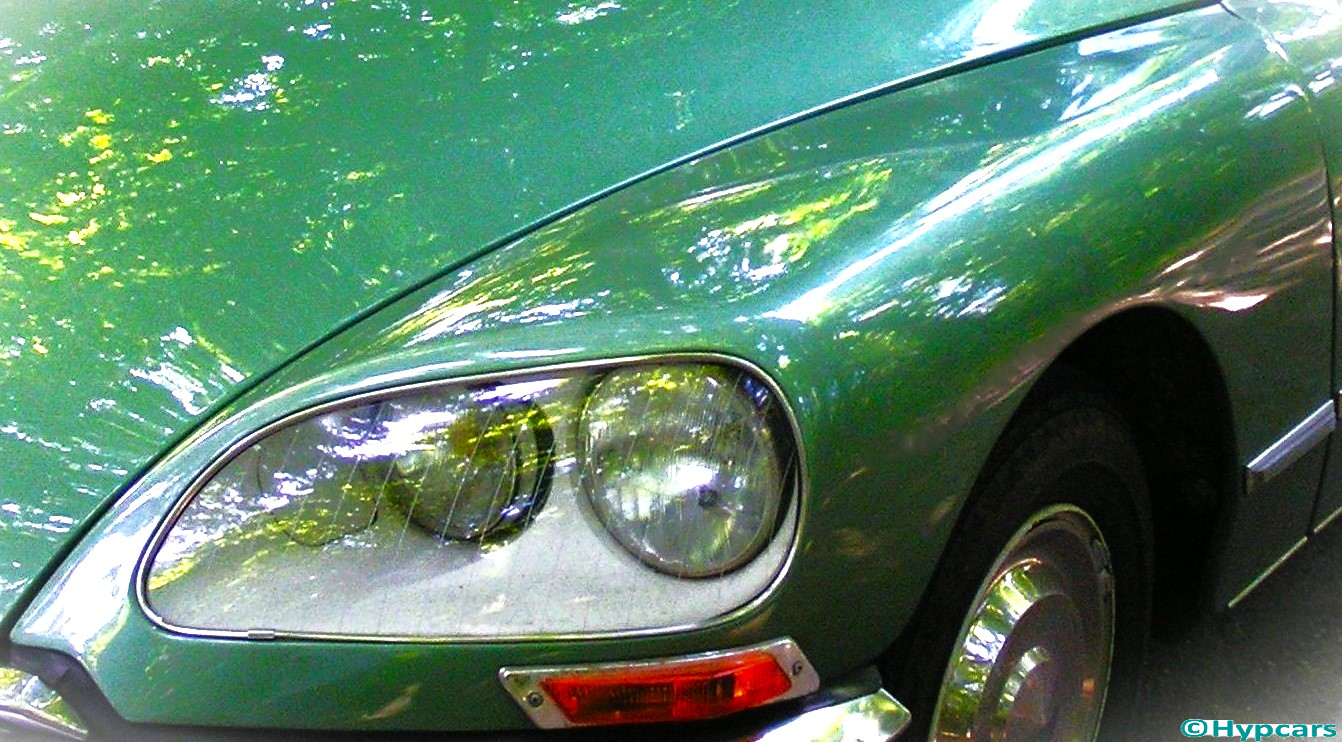
Despite their technological legacy, hypcars also showcase advancements in car design. Each model is a unique marvel, bursting with innovative ideas, crafted by unconventional teams of artists, designers, and engineers. Take the Citroën DS, for example—it flawlessly blends functionality and beauty, leaving an indelible mark on contemporary design. Certain body parts of the DS and other hypcars can be viewed as true works of art; just think of the DS’s sleek front fender and glass (see photo above), its floating roofline, the elegant boot lid hinges, and the sophisticated hanging cone-shaped indicators (see photos below). The same goes for the SM’s striking front fascia glass, the CX’s purposeful rear concave window, the C6’s graceful taillights and headlights, and the GS’s inventive pentagonal headlights.


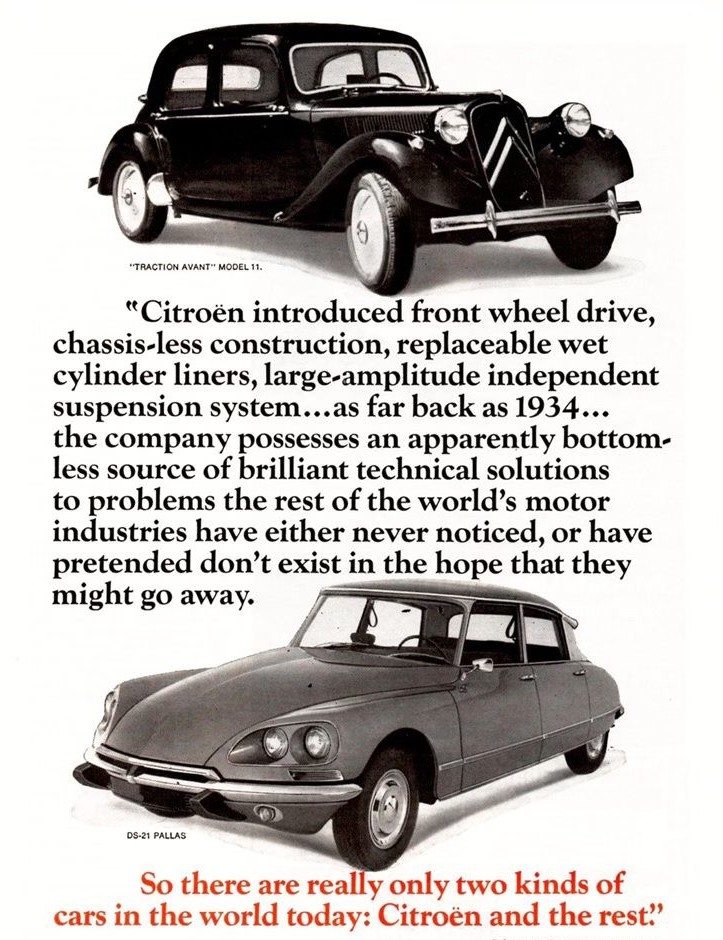
Many of these hypcar components have not been produced for over half a century; it is no exaggeration to say we could soon see them hailed as cultural masterpieces, permanently displayed in museums! The DS has already garnered recognition at various temporary exhibitions around the globe.
Unfortunately, while most hypcars were designed by Citroën—a brand once synonymous with innovation and bold technology—the company’s presence in the automotive landscape is at risk of fading away. This is particularly true after the formation of DS Automobiles and the unfortunate decision to abandon uniqueness as a selling point, starting with the ban on hydropneumatic systems—the heart of their excellence. On the bright side, classic hypcars are likely to soar in financial value due to their status as game-changers in the automotive market, along with their artistic and cultural significance.

Hypcars© is on a mission to spark a love for extraordinary classic cars while championing sustainable practices that honor their technological roots. These remarkable vehicles stand out against the backdrop of ordinary cars that contribute to the climate crisis. Our goal? To inspire the younger generation to appreciate and take responsibility for hypcars, ensuring that these automotive marvels can be enjoyed for years to come. After all, everyone deserves to experience the magic of cars like the DS and the SM at least once in their lifetime!
To bring this vision to life, we’re launching a touring exhibition that highlights Europe’s key role in automotive innovation, featuring fully operational models that enthusiasts can view, book, and drive. As virtual reality technology continues to evolve, we’re planning events that enable fans to engage with hypcars from anywhere in the world. We’re also exploring the concept of virtual ownership, offering collectors the opportunity to connect with classic hypcars from afar.
Let’s protect these classic hypcars from neglect and abandonment while celebrating Europe’s vibrant history of industrial innovation. Join us in shining a spotlight on the vehicles that have revolutionised the automotive landscape, inspired markets worldwide, and, even today, offer an unbeatable driving sensation!
