
Looking After the DS
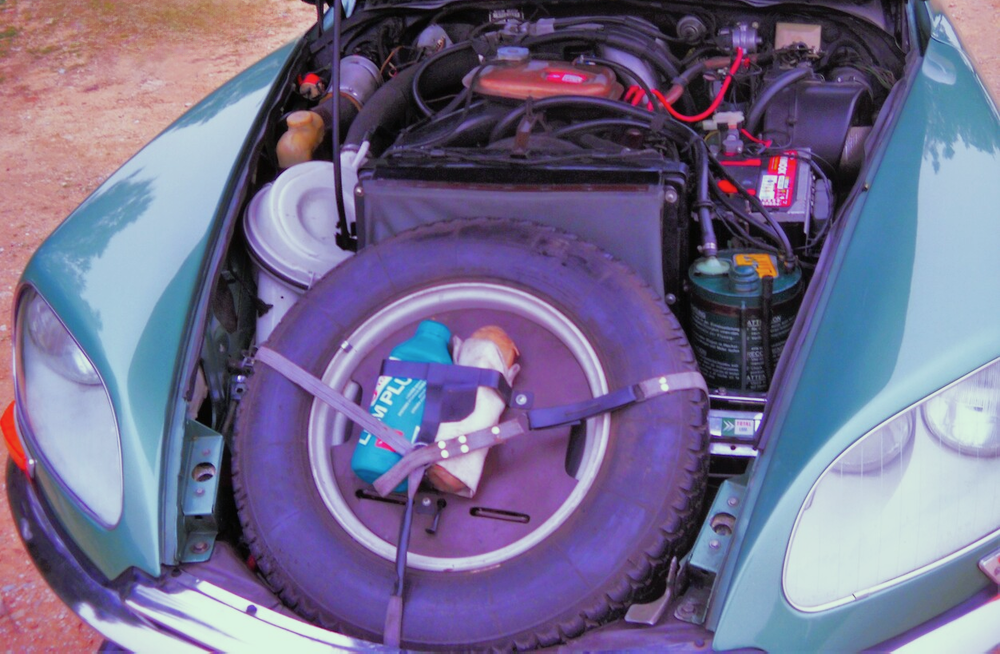
The DS stands apart with its uniquely integrated design, operating as a symphony of components rather than a mere collection of parts. This synergy means that for that legendary driving experience, every subsystem needs to be in top condition. Given this, and, let’s not deny it, the fact that this automotive icon was conceived more than 70 years ago, your journey to DS bliss should start with finding a complete and restorable vehicle.
If you are on the hunt for a DS, here are some crucial points to keep in mind. First things first, watch for any signs of corrosion in the superstructure, underbody, and body panels. Next, give the hydropneumatic system a thorough inspection for both external and internal leaks; this is vital for maintaining that famous comfortable ride and handling, as well as preventing unsightly stains from appearing beneath your hypcar. Finally, scrutinise the mechanical components for excessive wear or malfunction to anticipate nasty surprises and shocking repair bills. This inspection should cover the smooth function of the engine, gearbox, and transmission, as well as the behaviour of the front arms, ball joints, and rear trailing-arm bearings on the road.


When it comes to bodywork inspections, bear in mind that any DS is at least 50 years old! Finding a car with a subframe, side members, and panels in excellent condition is quite rare. Still, there is good news: many body parts are readily available. However, be cautious, as body panels—aside from the aluminium bonnet and fibreglass roof—can be susceptible to dings due to their lack of reinforcing ribs and are prone to rust. The more opulent Pallas models, laden with an extra 50 kilos of luxurious features and chrome adornments, can often conceal rust and other serious flaws beneath their shiny façades. Fortunately, every panel is fully removable and can either be restored or replaced. Body-panel replacements—except for that elusive aluminium bonnet—can be obtained in both sheet steel and synthetic materials.
Regarding hydropneumatics, the authentic DS models have a more complex hydraulic setup compared to the simpler ID and D Super/Special counterparts. Often equipped with a semi-automatic gearbox, these models require more intricate maintenance checks. The complexity of the additional hydraulic components should not be overlooked, and it is a decisive criterion when deciding which model to choose. In all models, the smoothness of the ride is tied to the condition of the suspension spheres. If the ride is not as smooth as silk, it’s time to recharge or replace those suspension spheres.


With five decades of experience with the DS, we can confidently assert that hydraulic failures are often the leading cause of immobilisation, outpacing mechanical or electrical issues. Cracked and leaking low-pressure return hoses are typically to blame, although we occasionally encounter broken high-pressure pipes. The good news is that crucial components in the hydraulic system, such as the high-pressure pump (left photo above), brake pump, circuit breaker, hydraulic gear (right photo above), steering, and suspension cylinders (middle photo above), tend to give warning signs long before a total breakdown occurs.
On the flip side, purely mechanical components are nearly indestructible. The engines and gearboxes of the DS (see the left photo below) are widely regarded as bombproof, provided their cooling systems are functioning properly. However, the EFi (fuel injection) DS 21 and DS 23 models do require a bit more care regarding the injector pipes (see the right photo below); any leaks here could raise alarms that may necessitate a visit from the fire brigade! Thankfully, the electrical system remains relatively straightforward, resulting in a robust and reliable setup. Issues with the regulator, alternator, starter, or fuel pump are quite rare.


In the end, keeping one of these iconic hypcars purring along relies heavily on diligent, regular maintenance and anticipated check-ups for its intricate hydromechanical subsystems. The fantastic news? With a considerable number of DSs still on the road, most spare parts are either being reproduced or can be reliably maintained. And for those seeking ultimate originality, a handful of suppliers, mainly in France, still offer elusive new old stock (NOS) parts.
Our DS in the hypcar collection has recently undergone an exhilarating complete overhaul, and you can find all the incredible details in the video below.
If you need more specific tips on buying and caring for a DS, explore the immense bibliography, clubs, and enthusiasts’ websites or consider joining a relevant club. Just a heads-up that not all resources may be in English. Here are a few examples:
When it comes to restoring and upgrading dashboard instrumentation, Fabrice is simply the best in the business!
Since 2020, Citroën DS Manufaktur in Germany has been bringing DS models back to life on demand.
Key Data for Routine Maintenance of Your DS 23 EFi
- Fuel tank: 65 litres petrol.
- Engine lubricant: 5 litres 20W50 mineral oil.
- Transmission lubricant: 2 litres SAE90 or 80W90 GL4 gearbox oil (do not use GL5!).
- Hydraulic circuit: 5.2 litres LHM fluid.
- Engine coolant: 13.5 litres.
- Spark plugs: MARCHAL 35.1B / AC42FS / BOSCH W225 T35 / EYQUEM 705 S / Champion L87Y / Marelli CW7N – CW240N (gap 0.6-0.7 mm).
- Battery: 250/50 Ah.
- Tyres: Michelin 185 HR 15 XAS/XVS. Recommended pressure front/rear: 30/26 psi.
- Suspension sphere pressure (front/rear): 75/40 bars (welded spheres), 59/26 bars (split spheres).
Low-Mileage Operating Intervals
- Yearly (max 5,000 km): change the oil and filter, lubricate doors, bonnet, handbrake, horn, distributor, and add a few drops of oil on the rear of the dynamo and the fan shaft.
- Every 2 years (max 10,000 km): yearly maintenance + renew coolant, lubricate front suspension and steering (at 14 points: 6 roll bar rods, 4 steering rods, 4 ball pins). Check, adjust, or replace: spark plugs, contact points, and drive belts.
- Every 4 years (max 20,000 km): 2-year maintenance + renew LHM (max. 30,000 km), clean its filter with petrol and air, clean the air filter, blow clean the water and oil radiators, lubricate the rear suspension ball bearings, lubricate the height correctors’ rods. Check, adjust, or replace: injection pipes, valve/tappet clearance (max. 10,000 km), fuel pipes, 6 hydropneumatic spheres, parking brake, rear drums, hydraulic hose connections, ground clearance, front wheel alignment, tyre balancing.
- Every 10 years (or upon reaching specified kilometres): 2-year maintenance + check/replace the fuel filter (max. 20,000 km), replace the distributor capacitor (max. 20,000 km), replace the ignition coil (max. 60,000 km), replace the drive belts (max. 50,000 km), check front suspension ball joints, steering rods, and rear swinging arms for any play.
- At 100,000 km: replace the timing chain and its tensioner.